REVIEW: Lawrence Moore’s ‘The Breadcrumb Trail’

A literary review by Sam Bartle

My first encounter with the work of Lawrence Moore was on social media via the ‘Poets On Thursday‘ platform on X, to which we both made regular contributions. We both enjoy rhyme and meter, so I took a natural liking to his poems, which he structures eloquently, often, though not exclusively, in free rhyming verse. That is to say his writing is not bound by accepted poetic forms and he will explore and experiment with his own, but always with a particular structure and musicality; not dissimilar to my own approach.

It is from this perspective of synergy with Lawrence’s writing that I was attracted to review his new collection, ‘The Breadcrumb Trail‘. Not only is it a beautiful work of poetry but this artistry is complemented superbly by the illustrations of artist, Jane Cornwell, who enhances the charm and enchantment of the book as a whole. With this work, Lawrence has deftly spun an interwoven dreamscape into which he invites the reader. It feels as if he is offering to take you by the hand and guide you through a mystic world of fantasy and magic, against the backdrop of the natural world, which is laced at times with undertones of menace. Cue imagery of forests and dark woodland paths, where fairies and sorcerers are real!
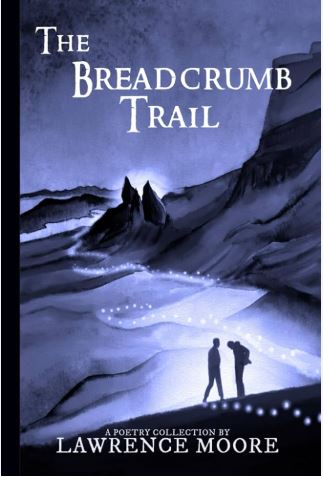
The Breadcrumb Trail‘ leads you into the poet’s fairy-tale world.

The decision to frame all of the poems within this fairy-tale world has proved to be a creative masterstroke as it helps thread the work together and add to the sense of journey that the reader experiences from start to finish. Indeed, the book’s title itself hints at this (the ‘breadcrumb trail‘ being how Hansel & Gretel found their way home through the forest in the much-loved fairy tale). It also provides an enthralling setting for Lawrence to introduce a number of poignant strands like love, loneliness, and introspection.

In ‘Their Morbid Measurings‘ the author uses the image of a tree stump, freshly felled and bearing two hundred rings, to reflect on the passage of time and the ways in which we measure our own lives. He contemplates the whimsical notion of being cleaved into units, querying what measurements would best capture the essence of his existence. The tree rings symbolize a life divided into moments—some regrettable, some hopeful— as he walks in solitude, meditating on how the past, present, and future can intertwine in a single moment of solitary observation.

Walking on my lonesome, Sunday morn,
Beyond the average human’s casual reach
I chance upon a tree stump, newly felled
Two hundred circles wide, four seasons each

‘Their Morbid Measurings’, from ‘The Breadcrumb Trail’ page 22, by Lawrence Moore

The theme of loneliness is continued in ‘Interstellar‘, a poem that also introduces a profound sense of longing, against the juxtaposition of the personal and the cosmic. The stars are a symbol of distant love and connection, becoming the object of the speaker’s yearning, embodying the belief that something—or someone—is just out of reach. There’s a mythic quality to the poem, where the speaker almost believes that the presence of the stars is tied to their own sense of belonging or connection. It speaks to the universal human desire for intimacy and the tension between the finite self and the infinite universe.

I look up at the stars
and sense that one of them is yours,
almost prepared to believe the myth
that I could never reach it…

‘Interstellar’, from ‘The Breadcrumb Trail’ page 47, by Lawrence Moore

As well as longing, it becomes clear that the author also finds peace and harmony in solitary thought. For example, in ‘Swirling in Sync‘:

Sometimes it’s okay to be alone
when the stars
and the clouds
and the moon
intermingle in just the right way,

‘Swirling In Sync’, from ‘The Breadcrumb Trail’ page 56, by Lawrence Moore

The poem celebrates the harmony that exists in the natural world, offering comfort to the author as he connects with the elements and the rhythm of the universe. The repetition of “swirling in sync” suggests a deep, almost spiritual connection to the natural world, where the author finds a sense of belonging amidst the vastness of the earth and sky.

The reader also gains a sense of the tension between external reality and the author’s own internal world. ‘By Phonelight‘ explores this with imagery such as “aging, twisted oak” contrasted with the glowing “phonelight” that guides his journey. The light becomes a metaphor for the act of reaching out, capturing a sense of yearning for transformation and discovery, as the author wishes for passers-by to mistake him for something ethereal, like a glow-worm, so that he may continue to use words to open windows onto his dreamscape.

I ask that passers-by
mistake me for a glow-worm,
that I am left
to lever words like windows
until they open
onto the land I walk in dreams

‘By Phonelight’, from ‘The Breadcrumb Trail’ page 43, by Lawrence Moore

In ‘Fairies Exist‘, Lawrence takes the reader deeper into his magical realm, where he asserts that fairies exist, offering a vision of hope and fantasy in opposition to the cynicism of society. The poem challenges the conventional and celebrates belief in the intangible. Through a series of contrasts—”sunset red skies” that remain out of reach, “loves lost in retreat,” and the idea of fairies and the breeze—the poem suggests that there is wonder in the world beyond what is visible. In its final lines, the author confidently declares, “Fairies exist and I will be yours,” embracing a sense of agency and belief that defies the mundane.

Other folks’ loves are lost in retreat,
scattered and scarred by first springtime heat,
yearn for the forest, hide from the trees.
Fairies exist and so does the breeze.

‘Fairies Exist’, from ‘The Breadcrumb Trail’ page 66, by Lawrence Moore
‘The Breadcrumb Trail’. Illustration by Jane Cornwell

The Breadcrumb Trail‘ is a compelling and nuanced collection that captures the full spectrum of human experience. From the reflective melancholy of ‘Their Morbid Measurings‘ to the playfulness of ‘Fairies Exist‘, the author navigates themes of isolation, connection, and the search for meaning. Each poem in the collection presents a unique perspective on the complexities of life, offering both introspective depth and a broader vision of the world. Lawrence Moore’s skillful use of imagery, metaphor, and tone challenges the reader to consider the magic and mystery that lie beyond the surface of the ordinary in a poetic journey that is as thought-provoking as it is emotionally resonant.

By Sam Bartle

(‘The Breadcrumb Trail‘ by Lawrence Moore is available to buy from Amazon.

Get free notifications of new posts from ‘Poet In Verse’ by subscribing below:

REVIEW: Dean Wilson’s ‘Take Me Up The Lighthouse

A literary review by Sam Bartle

Having spent my early childhood in the East Yorkshire seaside town of Withernsea, it holds a special place in my heart, so I couldn’t resist reviewing the work of poet Dean Wilson, who refers to himself magnanimously as ‘Withernsea’s 2nd Best Poet’! Dean has gained great public acclaim and affection for his words, and has also achieved fame for his pebble-picking on Holderness coast beaches which he transformed into a successful social media feature (‘Pebble Of The Day‘), that he ran for almost three years, and now continues that popularity with content for ‘Dean’s Discoveries‘ in the Holderness Gazette. His friend, the writer and producer Dave Lee, has also made a number of short films with Dean in celebration of his work, usually at coastal locations.

‘Take Me Up the Lighthouse’ by Dean Wilson is full of rhyming verse about love, desire, and his affection for Withernsea and the local area..

When deciding which of Dean’s books to review, I was immediately drawn to ‘Take Me Up The Lighthouse‘, perhaps because I used to live in Withernsea and immediately realised the title was both a reference to the landmark white lighthouse that towers over the town, and also a euphemism for some form of amorous activity! Indeed, the title is a perfect abstract of two key themes that seem to occupy the book: Across an incredible 55 poems, the author skilfully sets raw emotions like desire, love, and perhaps also loneliness, against the backdrop of a mundane Holderness landscape. However, this is far from derogatory and acts as a nod of affection to the whole area, which Dean interweaves with his trademark brand of subtle humour. Arguably, not all of the poems deal with these themes, but I think this is something that particularly stands out for the reader. The work is firmly and unapologetically based on rhyming verse, and the rhymes come thick and fast. Perhaps this is best summed up by his poem, ‘Holderness’ in which he references his deep affection for rhyme:

I’m on the bus
to Hornsea
there’s
no one
on the top
deck but me
I’m rhyming furiously
because rhyme sets me free…”

‘Holderness’, from ‘Take Me Up The Lighthouse’ page 22, by Dean Wilson

As someone who shares the author’s fondness for rhyme, this resonated with me as a reader, and I found myself enjoying the simple yet effective way that Dean delivers his refrains and arranges the poems on the page. In many of the poems, the lines are set out in couples, sometimes only two-three words in length, making them accessible to read. This means that the reader can just enjoy the rhyme and doesn’t have to read and re-read each stanza to interrogate and unpick intricate literary devices and meaning. Some of the best writing is arguably that which delivers its message succinctly and doesn’t try to attain greater depth by shrouding itself in mystery and, in this book, the messages are simple and clear. One of those messages is the desire to be loved:

“Kiss me under
the pier, dear
kiss me ’til
my lips are sore
and my teeth
lose their veneer…”

‘Kiss Me Under The Pier’, from ‘Take Me Up The Lighthouse’ page 11, by Dean Wilson

Take Me Up The Lighthouse‘ is published by Wrecking Ball Press

Obviously, the reader can detect the humour within the writing but you can also sense the author’s desire for passion, and this accumulates through the collective reading of each poem:

“…pin me against
a haystack
there are worst men
you could adore

pin me against
a haystack
your hot hands
will help me thaw.”

‘Pin Me Against A Haystack’, from ‘Take Me Up The Lighthouse’ page 50, by Dean Wilson

The poem after which the book is entitled, perhaps encapsulates this emotion best:

“Take me up
the lighthouse
it’s been quite
a while

take me up
the lighthouse
please don’t
run a mile…”

‘Take Me Up The Lighthouse’, from ‘Take Me Up The Lighthouse’ page 45, by Dean Wilson

Many of the poems in the book also reflect on the object of desire and the various men that the author has been attracted by on his travels. Poems such as ‘Guard’, ‘Pipe Fitters’, ‘Yacht’, ‘Kevin Webster’, ‘Gary’, ‘Queen Street‘, and ‘The Lifeboatman‘ all contain subtle notes of that secret desire for the strangers he meets, and are sometimes characterised by Dean’s contemplations of what would happen if his romantic ambitions were to be revealed:

“…maybe we’ll
become pals
and drink in
The Alma together

or maybe he’ll shun
me in the street
when he realises
it’s romance I’m after.”

‘Halifax Dish’, from ‘Take Me Up The Lighthouse’ page 34, by Dean Wilson

The book takes the reader on a ride of rhyme through Dean’s beloved Holderness.

In the poem, ‘And Then Where Would I Be?’, Dean meditates on finding love itself, and the consequences that may have for his poetry, reconciling that the search for love is perhaps what keeps the flame of his creativity burning and allows him to continue writing. To find love, might therefore jeopardise his poetry:

“…Do I really
want to wake up

in a big strong
man’s arms

if it means
never waking

up with
a verse?”

‘And Then Where Would I Be?’, from ‘Take Me Up The Lighthouse’ page 40, by Dean Wilson

On the basis of having read this book, I believe the fear would prove unfounded, and finding love would actually steer the author’s creativity in new directions, and of course, I don’t think it would alter his ability to find observational humour in his surroundings (as in ‘Bus 1’, ‘Bus 2’, ‘Bus 3’, and ‘Bus 4’, for example), nor would it dampen his articulation and celebration of his beloved ‘With‘ (Withernsea) and the rest of the Holderness area:

“…roll up
your slacks

take off
your vest

everyone knows
With is the best.”

‘With Is The Best’, from ‘Take Me Up The Lighthouse’ page 60, by Dean Wilson

Take Me Up The Lighthouse‘ is a charming take on the world, as seen through the eyes of the author, and you can’t help but smile as he takes you on this ride of rhyme through Holderness, making it a must-read for any aficionado of the rhyming verse.

By Sam Bartle

(‘Take Me Up The Lighthouse‘ by Dean Wilson is available to buy from Wrecking Ball Music and Books in Hull or online from Wrecking Ball Press .

You can also find it in the ‘Shop’ section of Dean’s website, ‘DeanWorld‘, where you can learn more about the poet himself: www.deanworld.org).

Get free notifications of new posts from ‘Poet In Verse’ by subscribing below:

Away With Words

Poetry and Spoken Word Night at Union Mash-Up, Hull

When first embarking on my poetic adventures, it used to feel as though the opportunities to actually perform my work were few and far between, but in 2022 I discovered ‘Away With Words‘, a poetry and spoken word open mic night organised and hosted by legendary Hull poet, Jim Higo. This free event has been running since 2012, so is over a decade old and, whilst it’s had different venues across the city of Hull during its lifespan, it now occupies the ambient rooms of Union Mash-Up on Princes Avenue. The event is renowned in Hull as a forum for celebrating and supporting local creatives. As soon as you enter the doors of the building, you instantly get a welcoming and intimate feel from the place, and that’s in no small part thanks to Jim Higo and the passion and commitment he has invested in the event, right from its very beginning.

Having learned of this event from some other poets, I decided to give it a go myself and see if I could muster the courage to read a few verses. So, one evening in the early Spring of 2022, I went along to Princes Avenue, Hull, to share a few lines with an unsuspecting public.

Reading from my poem, ‘The Omega: Dark’ at the ‘Away With Words’ poetry and spoken word night, Union Mash-Up, Hull (Image: Jim Higo)

The Union Mash-Up is a bar and restaurant that plays host to arts and cultural events on its first floor. The venue is converted from former residential premises and there are charmingly nuanced traces throughout the building, that reveal its former use as a home; perhaps none more revealing than the old fireplace directly behind the stage! Once you ascend the old staircase you’re greeted by a wall of warmth, generated by the gathering crowd and the relatively small space. It actually feels rather cosy, and everyone is there to have a good time and listen appreciatively to what all the poets and spoken word artists have to offer.

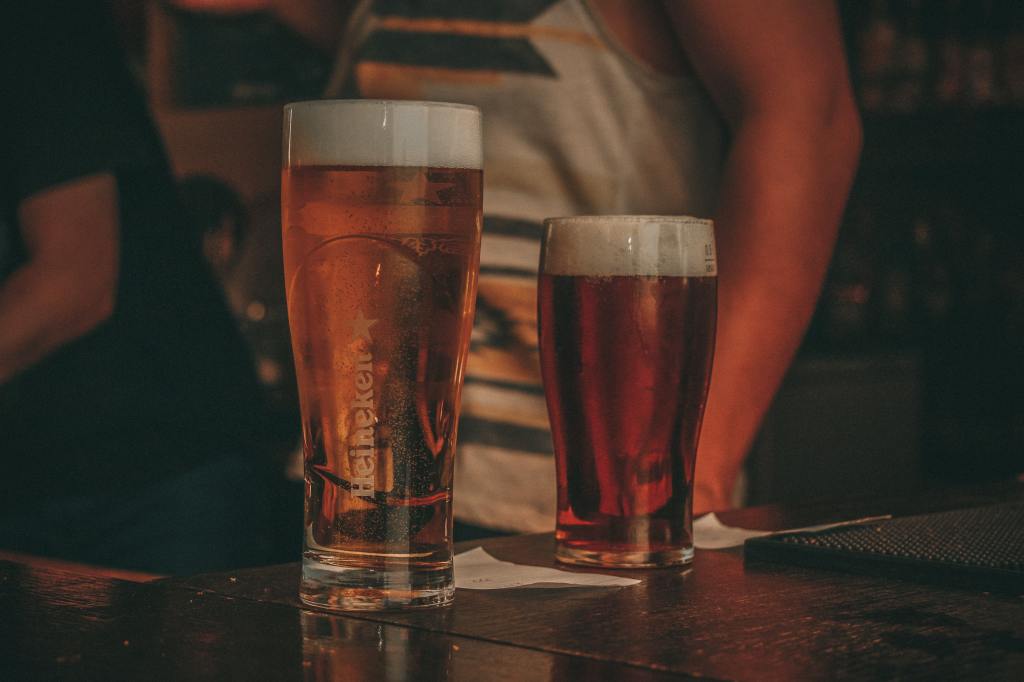
The friendly atmosphere of the venue helped to put me at ease as I took my seat, pint of pale ale in hand, wondering if my drink would help add to the sense of relaxation, or render me slightly too tipsy to read properly! Jim was working his way down the rows of seats, taking down the names of people who wanted to go up on the stage, and allocating the running order. When he came to me, I elected to do my stint in the first half of the evening, deciding that it would be better to get it out of the way as early as possible and save my nerves. After registering as one of the poets for the night, I sat back and waited to see what happened next, the dim light of the room adding to the anticipation.

“It’s about celebrating the range of works, performances, and creativity that the city has to offer, and so it really doesn’t matter whether you have a finely tuned stand-up routine, or are just reading from your mobile phone.”

About three or four performances in and a sudden wave of fear came over me as I watched in awe at the polished professionalism of the people taking to the stage. It was clear that a number of the performers were accomplished entertainers, generating huge laughs from the audience through their spoken word acts. As a fledgling poet, who would consider it a success just to read a few poems from his tablet, I wondered for a moment if I’d made the right decision, but this is the beauty of the ‘Away With Words‘ event; all are welcome. It’s about celebrating the range of works, performances, and creativity that the city has to offer, and so it really doesn’t matter whether you have a finely tuned stand-up routine, or are just reading from your mobile phone. Everyone is welcomed and encouraged. As the night wore on, I could clearly see this was the case and so as my turn approached I was much more reassured.

“I got on the stage with my tablet and began to read to the audience my rhyming verse about the harsh reality of alcoholism as they supped their pints of real ale and sipped at their cocktails!”

I like to write all kinds of rhyming poetry, both light and dark, and I’d recently shared a particularly contemplative poem on social media , called ‘The Omega: Dark’, about the experience I had living with an alcoholic landlord, who tragically died. After doing this, Lucy Clark (formerly of BBC Radio Humberside) commented on my post and said I should do ‘Away With Words’ at Union Mash Up. I took this to mean that I should read my dark, brooding poem at this event, so I now had it lined up on my tablet, ready to go on the night. After soaking up the atmosphere though, I could see that most people seemed to have come here for a night out, to be entertained, and I began to doubt Lucy’s advice about reading my sinister little poem! With hindsight, I think she just meant that I should go along to the event and do a reading, but it was my plan now to read this particular poem and I was sticking to it.

My poem, ‘The Omega: Dark’ looks at the tragedy of alcohol abuse. (Image: Segev Vision, Pexels)

I got on the stage with my tablet and began to read to the audience my rhyming verse about the harsh reality of alcoholism as they supped their pints of real ale and sipped at their cocktails! I felt like I was going to be heckled as some sort of Puritan preacher, but despite feeling like I’d misjudged the whole thing, the audience were brilliant and so appreciative, which I think signals what a great and welcoming event ‘Away With Words‘ is for anyone who just wants to come and try out their work on a public audience. After reading ‘The Omega: Dark‘, I rattled off a couple more poems that were less stark, but still fairly traditional works. For me, it was ‘mission accomplished’ and actually a great feeling to have played a small part in the evening.

Sadly, the shift pattern of my day job has since clashed with every ‘Away With Words‘ night this year so I’ve been unable to get back again. If it comes to it though I’ll try and get some time off and return to have another go. Hopefully, next time I’ll be able to try out some of my lighter material!

By Sam Bartle

For details of the next ‘Away With Words’ poetry and spoken word night, visit the Union Mash Up Events page

The Passing Year

Poem, published in Pomona Valley Review

Earlier this year, my poem, ‘The Passing Year’ was published in issue 16 of Pomona Valley Review. It was both gratifying and reassuring for me that editors Clem and Whitney chose to use the poem, as I’m particularly fond of it and had already been rejected by eight other publications. Had I not been so attached to it, then I may have decided to abandon the pursuit to publish and leave it on the proverbial backburner, while I concentrated on submitting other works. However, my persistence paid off on this occasion, and I’m so glad that I continued to enter submissions!

Even without the upheaval and turmoil of the COVID-19 pandemic in the past few years I still think it’s fair to say that, when we all look back on our lives over any given year, we experience and bear witness to an incredible range of highs and lows during that short timespan. It’s this bittersweet sense that I’ve tried to encapsulate with ‘The Passing Year’.

“I can’t fail to wonder at all these things, to be amazed by what the passing year brings.” from ‘The Passing Year’ by Sam Bartle. (Image: Bogdan Dirica. Pexels)

It observes the struggle and hardship caused by adversity and how we try to keep going until we encounter better times ahead, but for me it’s also a reminder that when those good times arrive they must be enjoyed and savoured. The places we go to in our lives can play host both to experiences of love and happiness, or hatred and sadness, so our memories of those places can become bittersweet as well, which is something I’ve tried to reflect with the lines:

 "These different worlds all in the same space, 
In transience, come and go from your sight."

Read Issue 16 of ‘Pomona Valley Review’ here, where you’ll find ‘The Passing Year’ at page 228.

By Sam Bartle

Adventures In Upload

Poems on BBC local radio

Road To Upload

When I first started out on my poetic adventures amidst the COVID-19 pandemic, I didn’t consider that drifting into the airwaves with my poems would be one of the consequences, but it seems that writing breeds an unending quest for an audience, especially in this genre, where most of the platforms for publication aren’t immediately obvious, nor particularly mainstream. So, it was a refreshing surprise when I discovered BBC Upload.

I’d often enjoyed listening to Lucy Clark’s Sunday Afternoon Show on BBC Radio Humberside, especially during the pandemic, and so when she announced that she’d be covering Martha Mangan’s ‘No Filter’ programme, showcasing local creatives, one Monday evening in May 2021, I made a point of tuning in. I already knew, from listening to her shows, that Lucy was a poet herself and had a keen interest in poetry, so it piqued my interest when she put a callout for people to send in their poems via the BBC’s ‘Upload’ feature online. I was enjoying the programme, which was playing the work of local musicians and writers in the region, and thought to myself that I would give it a ‘bash’ and send something in, as it seemed like a good vehicle for reaching more mainstream audiences.

I began my Adventures In Upload on hearing Lucy Clark’s callout for poems on BBC Radio Humberside

The topic for my entry was climate change. I was in the middle of writing a poem reflecting on the climate emergency, and given this is one of the most talked-about issues, I felt it might stand a better chance of being selected. I think the poem was also experimental in the sense that I tried to use rhyming ‘sextets’ as opposed to couplets, which had the effect of laying on the rhymes quite thickly. After hovering over the ‘Send’ button for a while on the Upload site, stood on the proverbial precipice, I found the courage to click it and my work shot into the BBC Upload ether, possibly never to be heard of again.

However, incredibly, I heard back in under 24 hours and on Monday 21st June 2021 at 7pm, I was on the ‘No Filter’ programme, talking to Martha Mangan about my climate change poem! I’d literally just started writing full poems so didn’t feel at all qualified to answer Martha’s very respectful questions about my ‘creative process’, but gave it my best shot anyway.

‘On Beautiful Sky’ (poem by Sam Bartle)

Feeling More At Ease

I don’t know how other writers feel but, for me, the prospect of being ridiculed or laughed at is probably the biggest source of anxiety in showcasing my poems. I think this is what makes ‘Upload’ such a great initiative, because it encourages and celebrates people who come forward with their creative forms of expression, giving everyone a safe space to air their work.

So, it was lovely to chat with Martha, I felt very welcomed and encouraged about what I was writing, to the extent that I decided I would have a go at sending in some more poems. At this point, I think various shows and schedules were being re-jigged in local radio, as it took a bit longer this time before I heard back, but as we emerged into Spring 2022 I was contacted by the Upload Show for BBC Radio York to see if I wanted my poem, ‘Everyone’ , to be featured on their programme. At the time, they were also broadcasting to the BBC Radio Humberside catchment as well, so I guess this was broadening my reach, so to speak. I appeared on George Smith‘s programme in the evening on Wednesday 9th March 2022 and had a great time talking to him about how I started writing poems during the pandemic, and was working on a website called ‘Poet In Verse’!

‘Everyone’ (poem by Sam Bartle)

After this latest feature on Upload, I had to do a little double-take on myself as I realised I was starting to feel oddly at ease with the idea of sending in poems for them to be played on local radio – because this sort of thing is counter-intuitive to my nature! Whilst I still do feel a little daunted and nervous about doing it, I’m not overwhelmed by those feelings to the point where it prevents me from taking the plunge and submitting my work.

On reflection, I may have found the reason why this is the case: As part of my day job, I occasionally need to promote local history and heritage projects through local media, which sometimes involves giving interviews for local radio, including BBC Radio Humberside. For me, I think this has gradually had the side-effect of normalising the idea of speaking on the radio. In particular though, this is due to having had the opportunity to meet brilliant reporters such as Caroline Brockelbank, whom I feel ultimately have really helped to give me the confidence to approach BBC Upload, by making the organisation as a whole seem more warm, friendly, and less intimidating to me.

Meeting brilliant reporters like Caroline Brockelbank in my day job has helped give me the confidence to approach BBC Upload with my work.

The opportunity to chat with Caroline, with her charismatic, yet down-to-earth and approachable manner, has meant that any mystique, or nervous preconceptions I may have had about the BBC have been eroded and this, combined with the positive and encouraging nature of the Upload platform itself, has left me feeling much more inclined to share what I create.

Springing Forth

‘Springtide Bright’ (poem by Sam Bartle)

For my next Upload submission, I chose to send in the latest poem in a quartet I was working on about the seasons. I’d decided to write about each season as it began during the year, so that I could draw a little inspiration to begin the poems, although they’re mostly based on our stereotypical imagery of the seasons in the UK, in order to create a vivid scene. I was invited to take part in George Smith’s Upload Show on BBC Radio York on Wednesday 21st April 2022 to talk about the Spring edition of this quartet; ‘Springtide Bright’. The show is a section of George’s main four-hour programme from 6-10pm on Wednesday evenings when, between 7 and 8pm, he showcases one or two submissions, which can include the full range of creative works such as songs, poems, short stories, comedy sketches; basically, anything creative.

George Smith is on BBC Radio York, Wednesdays 6-10pm, where he presents the Upload Show 7-8pm (Image: BBC Sounds)

I’m always pleased when I’m selected for an Upload Show as it’s one of the main ways in which I can try out my poems on a mainstream audience. George has a great ability to maintain light and humour in his on-air conversations, and I guess that’s fortunate because I weighed in with a really heavy poem for my latest one, all about war and conquest through the ages, called ‘Heart Of Power , which had just been translated into Chinese by Poetry Lab Shanghai!

‘Heart Of Power’ (poem by Sam Bartle)

Branching Out

Having by now had three of my poems featured on BBC Radio York’s Upload Show, I was definitely feeling in the groove with things. I began to look through my work for other upload-worthy material and realised that I’d written some about specific places other than where I live, so wondered if these might be of interest to the relevant Upload Show for that region. Ever since first visiting Northumberland around ten years ago I’ve loved the place, and in between COVID-19 lockdown restrictions it became a peaceful retreat for me. Following a week’s holiday there in 2021, I wrote a poem in homage to Bamburgh, one of the many beautiful places that I visited on Northumberland’s spectacular coastline. The nearest local radio station on the Upload website was BBC Radio Newcastle, so I submitted it there and, sure enough, was invited by the show’s presenter, Tamsin Robson, to chat about the poem.

Tamsin Robson is on BBC Radio Newcastle, Wednesdays 8-10pm, where Upload submissions are featured 9-10pm (Image: BBC Sounds)

Entitled ‘Atop The Dunes o’ Bamburgh‘, it’s a kind of postcard poem drawing out all of the key features that stand out for me when visiting there. On Wednesday 3rd August 2022, Tamsin pre-recorded a chat with me that aired later in the evening, in which we both reminisced about the area; Tamsin on her childhood visits, and myself talking about recent holidays. I also declared my affection for the North East in general, having been a student at University of Sunderland!

‘Atop The Dunes o’ Bamburgh’ (poem by Sam Bartle)

Tamsin had previously asked if I’d written any other poems about the North East, and it so happened that I had a similar sort of poem for the town of Seahouses, about 3.5 miles south along the coast from Bamburgh, written during a visit earlier in June 2022. It’s called ‘Around Seahouses’ and Tamsin very kindly played this as well.

‘Around Seahouses’ (poem by Sam Bartle)

To be included on the Upload Show for BBC Radio Newcastle was great for me as it was a way of getting my poems out to even more people in the mainstream via a different local radio catchment, and I also loved chatting about the North East, which has played a big part in my life (perhaps at some point I’ll do a ‘Days Of Sunderland’ poem!).

At time of writing, the show is still available on BBC Sounds and you can listen to our chat (at 1:11:38 in the recording) here.

Looking back, all the poems I’ve sent to BBC Upload have been contemplative, reflective works, which isn’t actually representative of everything that I write, as I also cover silly, trivial subjects as well. My chats with George on his show have revealed that the latter is where his own preferences may lie, as my poem ‘Bin Day’ has stood out for him here on the ‘Poet In Verse’ website.

So, I guess that my mission now is to mix things up a bit with a light poem for my next submission! My thanks to BBC Upload for this platform, which I recommend to anyone out there who is creating something and wants a positive and encouraging environment in which to share their work. Long may the initiative continue.

Onwards and Upload!

‘Bin Day’ (poem by Sam Bartle)

By Sam Bartle

Springtide Bright

Blue River Review publishes poem from my ‘Seasons Quartet’

Back in October 2021, I decided to write a poem that tried to paint an image of a stereotypical English Autumn (known of course as the ‘Fall’ in the United States). Since then, at the turn of each season, I’ve attempted to do the same for the others, drawing partly on actual observation but largely based on the widely accepted characteristics of the seasons, which I tried to animate as much as possible. I’m delighted to announce that the third poem in that quartet, ‘Springtide Bright’, has been published by the Blue River Review Journal, and my sincere thanks to editors Whitney and Clem for giving this poem a space in their publication.

The poem uses natural features such as daffodils and snowdrops to try and draw a picture of an idyllic Spring. Image: Pexels (Suzy Hazelwood)

It attempts to convey the gentle warmth of Spring, and uses natural features such as daffodils, snowdrops, cherry blossom, primrose and birdsong to help draw the picture of an idyllic Spring day. Hopefully it works! At some stage I hope to publish all four poems collectively as a ‘Seasons Quartet’ so they can be read together, but for now I hope you enjoy reading ‘Springtide Bright‘ and other people’s poems on Blue River Review!

By Sam Bartle

Mortal Shades

‘The Mortal Ash’ and ‘The Shadow Of Mortality’ poems

By strange coincidence, two of my very first poems to receive publication have both been on the subject of mortality. It’s perhaps not the most comfortable subject to deal with, but I think the impetus to write about this came at a time of greater exposure to loss and grief than I’d experienced before, and made me feel more tuned-in to our own mortality and compelled to write about it. It may even partly explain why I began writing poetry in the first place.

‘The Mortal Ash’ is a poem that was prompted by news of the death of an ex-girlfriend (Image: Anna-Louise. Pexels)

‘The Mortal Ash’

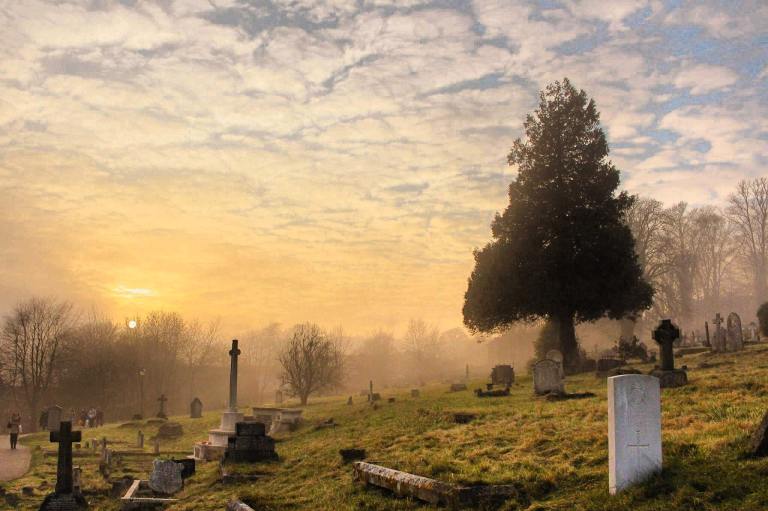
The poem is filled with sadness for me, as it reflects on the death of an ex-girlfriend. In 2021 I stumbled on the news, via social media, that her ashes were to be strewn at a remembrance ceremony, and it transpired that she had died 6 months previously. Shocked, and stunned by this chance discovery of her untimely death, I decided to locate the cemetery and went there the next day to pay my respects in private.

It was heart-breaking to see the ashes of the lovely person that I knew, who had so much life ahead of her, scattered on a patch of grass in front of me. So, when I returned home I wrote the poem in her memory.

The poem can be read in Duck Duck Mongoose magazine (Issue 1, poem no.16) My thanks to the editors for giving this a chance to be read in their wonderful new publication.

It seems as though we grow more aware and sensitive to our own mortality with age and experience (Image: Thorn Yang. Pexels)

The Shadow Of Mortality

This poem reflects more generally on the fragility of the human experience and how we seem to grow more aware and sensitive to our own mortality with age. I suppose the ‘shadow’ is always with us, but looms larger, and in clearer focus, with time and experience. However, the poem also makes the point of how we can use that to help us try to live our best lives.

The poem can be read in The Writer’s Club edition of 9th April 2022.

By Sam Bartle